The Fed Pivots: What the September Rate Hike Means for Investors
Posted on September 18, 2026
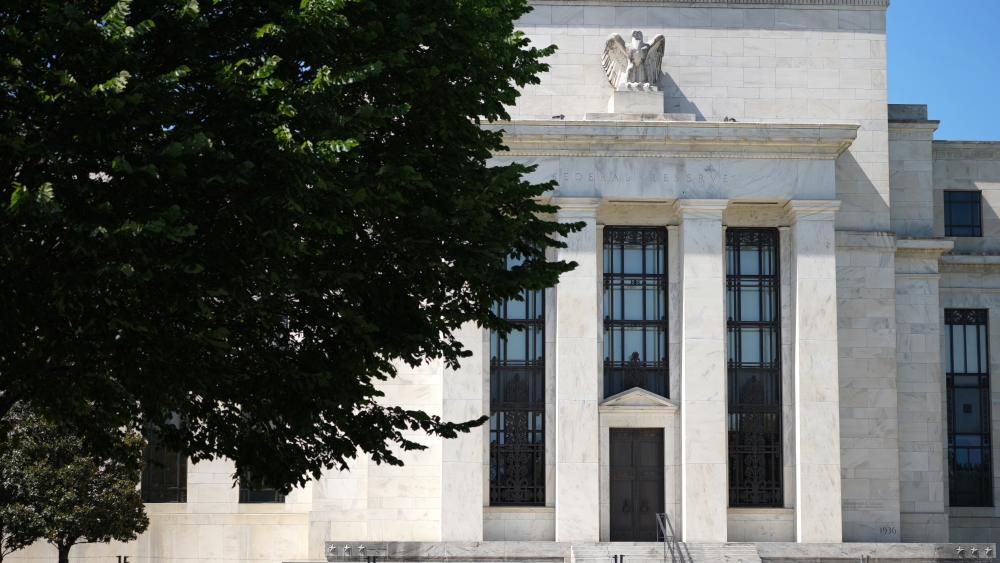
The Federal Reserve (“Fed”) delivered a widely anticipated 25 basis-point rate hike on September 16th, raising the federal funds target range to 3.75% — 4.00%. The Fed voted unanimously 12-0, which came as a surprise given the dovish tones from Christopher Waller and John Williams.
At the September Meeting, the Fed’ Summary of Economic Projections (“SEP” or “dot-plots”) signaled expectations for an additional rate hike by year-end, reflecting a timelier return to 2% inflation. As part of their dual mandate—promoting both price stability and maximum employment—the Fed must now walk a tightrope: inflation remains elevated, the AI boom continues to drive robust investment, and oil supply shocks in the Middle East are keeping pressure on prices.
Kevin Warsh reiterated in his remarks that the FOMC had “reduced a dose of accommodation,” adding that financial conditions are not clearly restrictive and that policy should focus on broader trends than individual data points. Warsh went on to say that “this summer’s inflation readings do not tell me that underlying trends have meaningfully improved”, noting that too many categories in the latest inflation data were still posting increases above 3% on a 6-to-12-month basis. This is notable because previous Fed Chair Jerome Powell led a very data dependent fed.
It is worth reflecting on how quickly monetary policy can change. This time last year, the Powell-led Fed was cutting rates as downside risks to the labor market had increased and the market was pricing in additional rate cuts. Today, under Warsh, the Fed began raising rates as inflation has returned as the primary goal of the dual mandate. Energy is a major part of that fight: West Texas Intermediate (“WTI”) is above $100 per barrel, while U.S. retail diesel prices are approximately at $6.30 per gallon, up roughly 70% than a year ago. August CPI was 3.4% year over year, while core CPI was 2.4%. Importantly, energy alone accounted for more than one third of August’s monthly increase in headline CPI.
To put it in perspective: when the Fed last began hiking in March 2022, core inflation was 6.5%, well above August’s 2026’ reading of 2.4%. The inflation problem is materially different from 2022, with energy playing a much larger role. A meaningful de-escalation in the Middle east or a faster than expected recovery in global energy supply, particularly Venezuela coming online faster than anticipated, should be viewed as an opening for the Fed to pause, so long as energy inflation doesn’t spread into the core.
To be clear, for the time being: higher for longer is back.
Takeaway:
With the Fed embarking on a renewed campaign against inflation and signaling more restrictive policy ahead, we believe it’s prudent to continue adding to fixed income. Following the recent sell-off in rates and widening credit spreads, we now view this as one of the best times in recent history to buy fixed income assets, with investment grade credit yielding ~5.7% and high yield at ~7.4%. While we expect equity volatility to persist, we remain confident in fixed income’s ability to generate consistent income and reduce portfolio volatility over the long term.
Miles Toth, CFP®
VP | Portfolio Manager



 My Account