Robocars: Coming to a Florida Road Near You
Posted on August 25, 2026
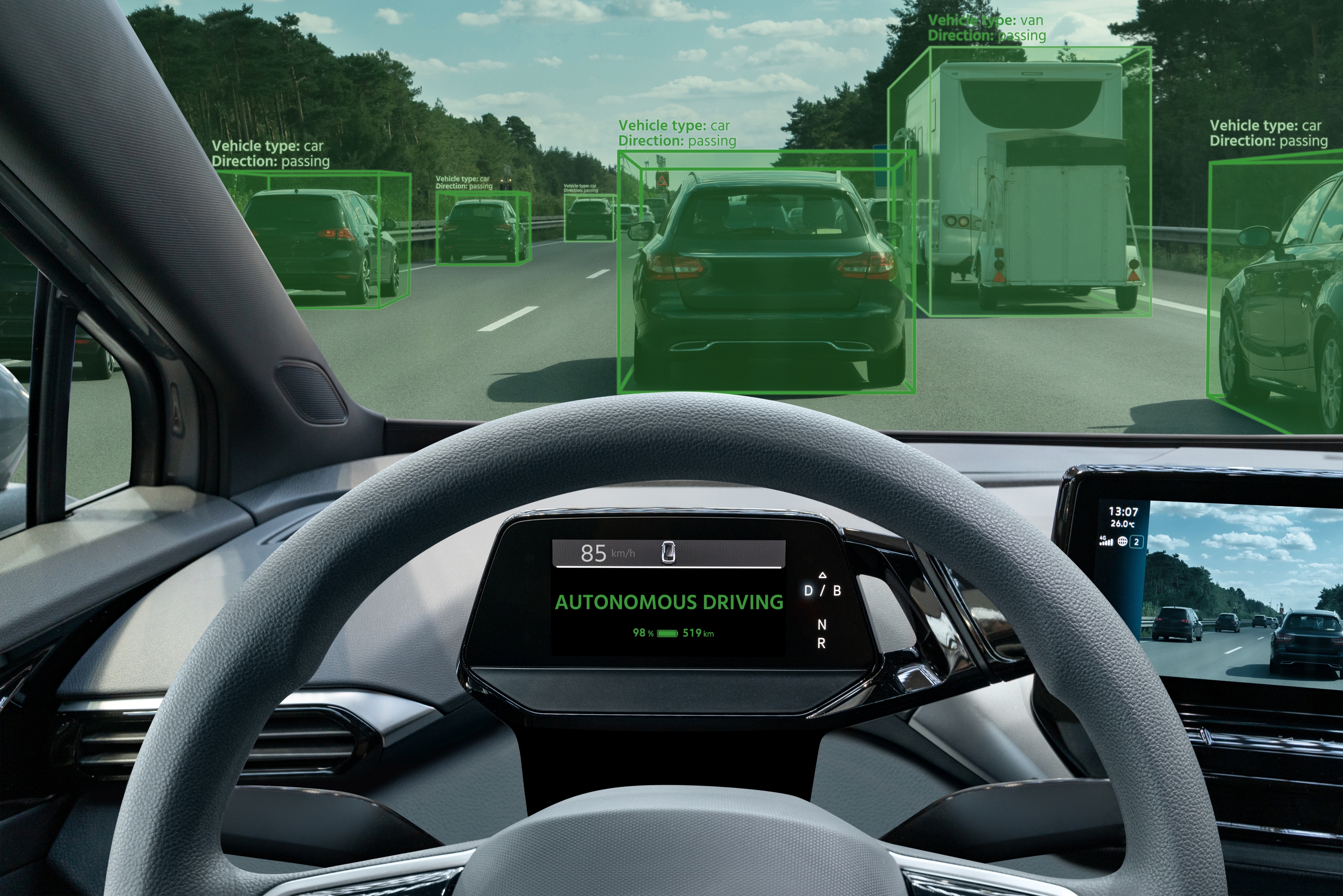
We’ve been hearing about autonomous vehicles since at least 2010, but now they’re becoming a reality on our roads. Fully driverless robotaxis are already operating in a growing number of U.S. metropolitan areas.
From an investment standpoint, Wall Street is becoming increasingly bullish on the driverless (or autonomous) car opportunity. Analysts estimate that robotaxis could become an approximately $50 billion U.S. business by 2035. Several companies are competing in the autonomous vehicle space. Major U.S. players include Alphabet’s Waymo, Tesla, Amazon’s Zoox and Uber. Waymo’s February 2026 announcement says it surpassed 20 million lifetime rides after completing 15 million rides in 2025. Alphabet is clearly signaling how important it believes Waymo could become: as much as $260 million of CEO Sundar Pichai’s 2026 compensation package is tied directly to growth in Waymo’s value.
Waymo is also rapidly expanding into new cities, including several in Florida. If driverless cars can successfully navigate the congestion and complexity of San Francisco and Los Angeles, Florida’s wide roads, favorable weather and rapidly growing population could make the state an important market. Waymo opened its fully autonomous ride-hailing service to the public in Miami and Orlando in April 2026. The company is also preparing to launch fully autonomous operations in Tampa. Initial rider-only operations are expected to involve employees, with public access expected to follow.
If you’re lucky enough to live in a city where Waymo operates, its white Jaguar I-PACE electric SUVs are easy to spot. Their most noticeable feature is the large, round sensor unit mounted on the roof. The unit contains lidar, which uses laser pulses to create a detailed 3-D picture of the car’s surroundings and detect pedestrians, vehicles and other objects. Additional cameras, radar and lidar sensors positioned around the roof and body give the vehicles their distinctive, futuristic appearance.
For many drivers, seeing a Waymo on the road can be a little eerie at first, particularly when one passes by with an empty driver’s seat and a steering wheel turning by itself. Others may find them frustrating. As Waymo learns a new city, its vehicles can be overly cautious, especially when pulling away from a traffic light or stop sign.
So, how do you schedule a Waymo? Simply download the Waymo app and request a ride, much as you would with Uber or Lyft. When your Waymo arrives, your initials light up on the sensor dome on its roof, letting you know the driverless car is yours.
Of course, the biggest question surrounding autonomous vehicles is safety. Waymo’s latest safety data, covering more than 220 million fully autonomous miles through March 2026, show its vehicles were involved in 82% fewer injury-causing crashes and 94% fewer crashes causing serious or fatal injuries compared with human-driver benchmarks in the same operating areas. Insurance claims data offer another perspective. Research conducted with Swiss Re found that, over 25.3 million fully autonomous miles, the Waymo Driver had 92% fewer bodily injury claims and 88% fewer property damage claims compared with the human-driver baseline used in the study. Robotaxis don’t get intoxicated, tired, distracted or angry, and they don’t look at their phones. Their sensors also continuously monitor every direction around the vehicle.
Still, the technology has challenges to overcome. One issue that has recently caught the attention of federal regulators is how autonomous vehicles respond to active emergency scenes and first responders. In July, the National Highway Traffic Safety Administration said it had documented multiple instances of driverless vehicles entering active emergency scenes, blocking ambulances or firefighters, or failing to appropriately recognize conditions including flashing lights, flares, smoke, fire and traffic cones. NHTSA called on autonomous vehicle developers to address the issue and said it would meet with developers to hear their proposed solutions.
From an investment standpoint, interest in the opportunity is growing. The global robotaxi market is projected to reach approximately $415 billion by 2035. For investors, the hope is that robotaxis ultimately deliver on two fronts: a safe, convenient and reasonably priced ride for passengers, and rising share prices for investors.
Technology continues to reshape how we live, work and invest. Understanding the trends behind that change can help put new opportunities into perspective.
At Florida Trust Wealth Management, we help you consider how an evolving investment landscape fits within your broader financial plan. When you’re ready, we’re here to help you think it through. Visit with an Advisor today.
Deborah Izzi
Senior Vice President | Portfolio Manager
About Florida Trust Wealth Management
Florida Trust Wealth Management is an independent state-chartered trust company with $6 billion in assets under management that provides Family Office and Wealth Management Services, including investment management, trust administration and financial counsel to high-net-worth individuals, families, businesses, foundations and endowments. The firm is focused on wealth management services that are absolute-return oriented and performance driven. Originally established in 2001, the company operated under its flagship name of The Sanibel Captiva Trust Company for 25 years, including its divisions of The Naples Trust Company and The Tampa Bay Trust Company. Offices in Sanibel-Captiva, Fort Myers, Naples, Marco Island, Tampa, St. Petersburg, Belleair Bluffs and Tarpon Springs. floridatrust.com
LEGAL, INVESTMENT AND TAX NOTICE: This information is not intended to be and should not be treated as legal advice, investment advice or tax advice. Readers, including professionals, should under no circumstances rely upon this information as a substitute for their own research or for obtaining specific legal or tax advice from their own counsel. Not FDIC Insured | No Guarantee | May Lose Value



 My Account